Friday, December 13, 2013

Resonating Trip to MOCA: Special emphasis on Jackson Pollock and Robert Rauschenberg


Breanna Castaneda
Art History
Terry Long
11 December 2013
The Los Angeles Museum of Contemporary Art, MOCA
            During my visit to the LA MOCA, I came across the works of Jackson Pollock and Robert Rauschenberg. Jackson Pollock was an American painter and major figure in the abstract expressionist movement of the post World War II 1940s. Robert Rauschenberg was an American painter and graphic artist whose early works anticipated the pop-art movement of the 50s and 60s. Together, these men were two influential artists who took conventional methods of painting and produced revolutionary techniques and innovations for their contemporaries to follow with.
            Pollock believed that an artist’s journey toward making a work was every bit as important as the piece itself. With that said, Pollock felt suffocated under the constraints of conventional painting techniques and he wanted out. In an effort to refresh the situation, he places his canvas on the floor and instead of acrylic or oil paint, reaches for some thick-bristled brushes and sticks, and some household paint and develops what is known today as “drip-painting”. Pollock’s drip technique allowed him to work feverishly and with wild abandon. He was able to view his work at all angles, he could feel the paint falling off the paintbrush as if it fell straight from his very fingertips. Pollock demonstrated liberation and a newfound emotional intensity in the creation process.
            Rauschenberg developed works that are referenced today as “combines”. Rauschenberg gathered all kinds of non-traditional materials and objects and combined them in innovative combinations with traditional forms of sculpture and painting. Developed a series of “White Paintings” in which he utilized traditional monochromatic painting, intending to reduce the painting to its most essential nature so the viewer is subject to the pure experience of the colors. His combines are representative of his efforts to bridge art and life, he brings non-traditional objects in to create something with an air of surprise and mystery- it’s not merely a sculpture or a painting anymore, it goes beyond into a whole new level. 
            Pollock and Rauschenberg dared to push the limits and in doing so fell into this world of liberation, wild expression by any means and the freedom to let innovations fly. Both artists had an innate ability to connect physically with their work, Pollock pacing around his canvas board on the floor, fervently searching for where the next splatter should appear next; and Rauschenberg, assembling a   These men opened the eyes of every artist to come; pushing conventionality and tradition out the window, they have shown the world’s modern artist to be okay with disruption and confusion and allow themselves to let go and fully experience their piece as they’re in the creation process.

Mural, Jackson Pollock
1943, synthetic resin-based paint
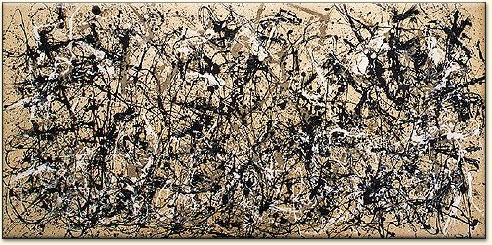

Autumn Rhythm, Jackson Pollock 
1950, synthetic resin-based paint

Monogram, Rauschenberg
1959, random materials available and stuffed angora goat with tire
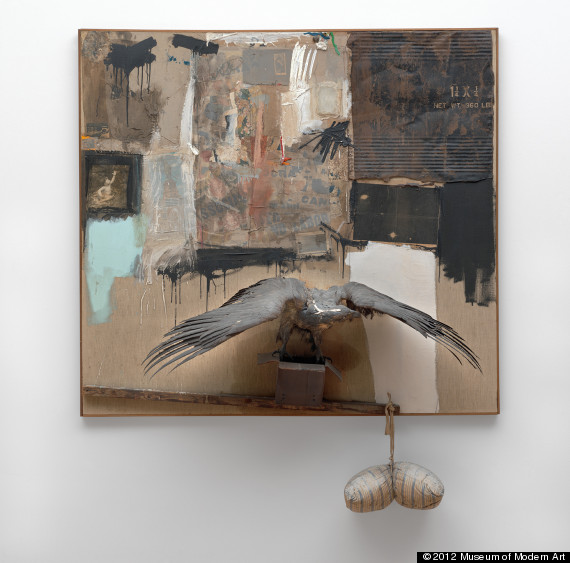
Canyon, Rauschenberg
1959, combination painting


Image Sources
"American Abstract Expressionism: Painting Action and Colorfields." American Abstract Expressionism: Painting Action and Colorfields. N.p., n.d. Web. 13 Dec. 2013.

Brooks, Katherine. "Robert Rauschenberg's 'Canyon' Donated To MoMA (PHOTO)." The Huffington Post. TheHuffingtonPost.com, 28 Nov. 2012. Web. 13 Dec. 2013.

 "Cave to Canvas, Monogram - Robert Rauschenberg, 1959." Cave to Canvas, Monogram - Robert Rauschenberg, 1959. N.p., n.d. Web. 13 Dec. 2013.


Artemisia Gentileschi and Jacques-Louis David, 17th and 18th Period


Breanna Castaneda
Art History
Terry Long
Artemisia Gentileschi and Jacques-Louis David
            Artemisia Gentileschi was a female, Italian Baroque-style painter and is still considered today to be one of the most accomplished painters of her generation following the works of Caravaggio. In an era where female painters were not easily accepted by artistic communities or patrons, Artemisia ultimately became the first female painter to be accepted by the Accademia di Arte del Disegno in Florence, Italy. Later, in the late eighteenth century, Jacques-Louis David embodied a new style of painting not seen before. This new style came to be known as Neoclassicism, marking a change from the current Rococo style of painting and introducing a preference for classical influences.
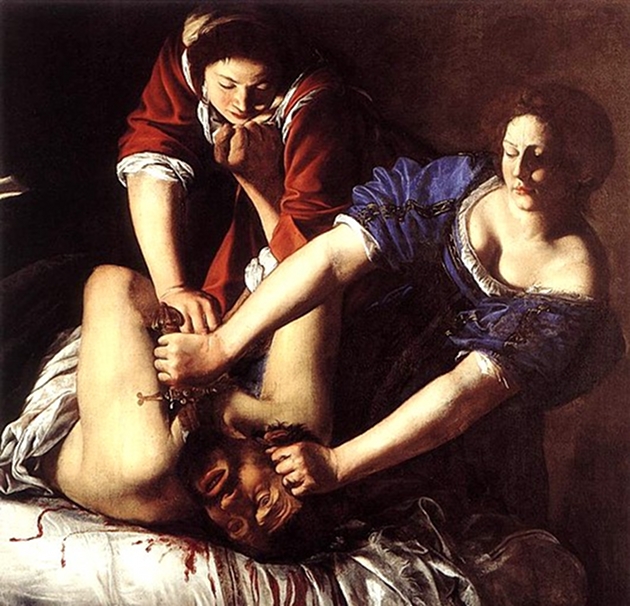
            While both were very accomplished, they were from different eras and different styles. Artemisia referenced images of strong women of biblical and mythological origin. In her first painting, “Susanna and the Elders”, a young girl, naked, vulnerable and distressed is sexually harassed by her two assailants- the elders. This painting reflects the Baroque-era influence in its drama and in its appeal to the viewer’s emotion. In another piece Artemisia has depicted Judith, a female figure in Christianity who signifies overcoming Satan and fleeting through Hell, violently severs Holoferne’s- a general in the Roman Empire. This painting echoes the Baroque style as Artemisia manipulates light amongst heavily darkened, pigmented colors and her inclusion of biblical figures offers a dramatic flair to the painting.
            After the Baroque era artists entered a period known as Rococo. This period placed emphasis on lighter, pastel color choices rather than the darker tones of the Baroque period, and paintings often depicted frivolity amongst the subjects. Soon to follow the Rococo period, Neoclassicism took up. In Neoclassicism the emphasis is most stressed on form, proportion, a contained emotion and differs considerably form predecessors Baroque and Rococo intricate ornamental design- scenes often kept simple and uncluttered. Jacques-Louis David re-invigorated classical austerity and reflected ideas of his life during the transitioning period of the French Revolution. One piece in particular, titled “The Death of Marat” (1793) was designed to commemorate one of his comrades after he was brutally assassinated in his own home. David painted Marat’s face and body glowing in a soft light, his style reminiscent of classical art captured Marat mirrored as a Christian martyr. David’s classical training in Rome is beautifully displayed in this piece and Caravaggio’s influence is recognized, just as it is in Artemisia’s work.

Susanna and the Elders, Artemisia Gentileschi
1610, oil on canvas 

Judith Beheading Holofernes, Gentileschi
1611-1612, oil on canvas

The Oath of Horatii, Jacques-Louis David
1784, oil on canvas

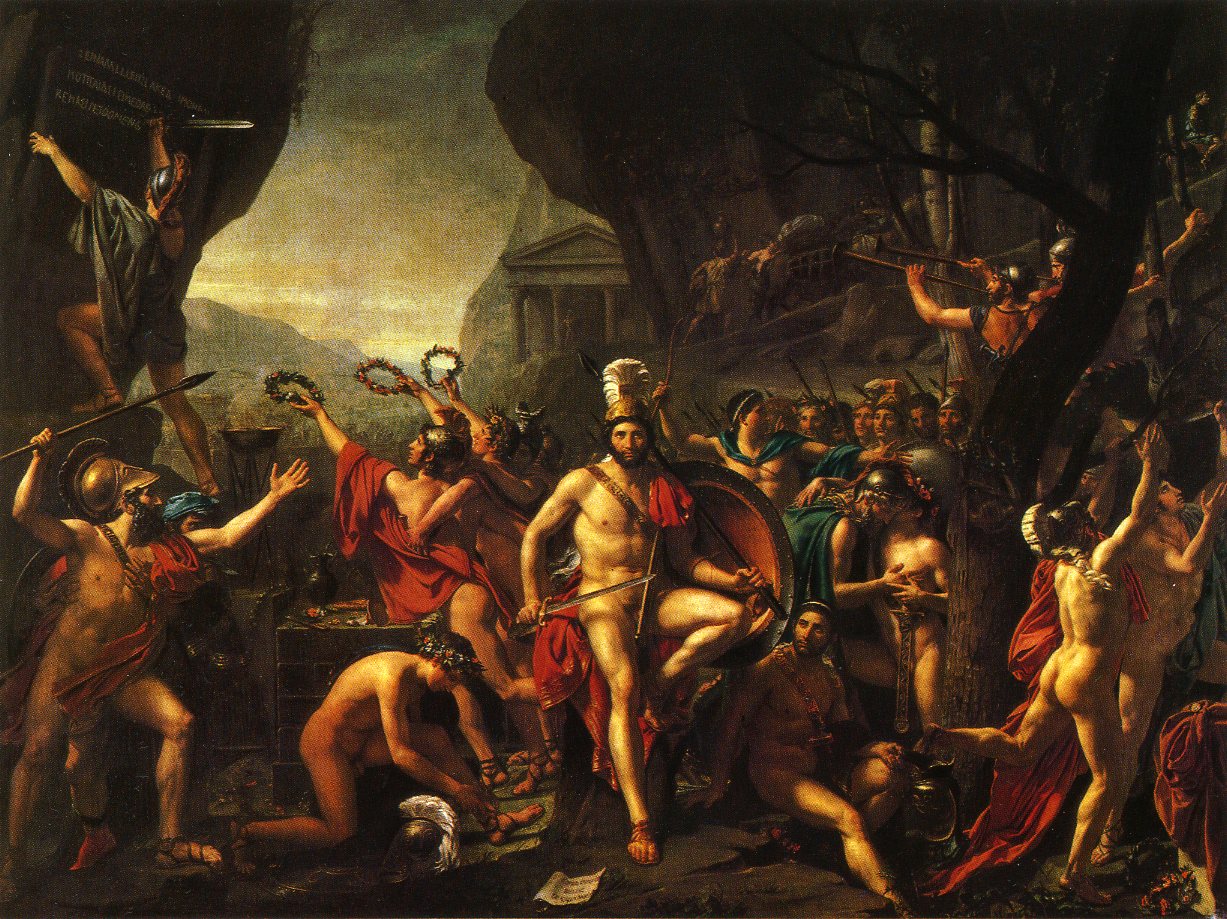
Leonidas at Thermopylae, Jacques-Louis David
(1799-1803), and (1813-1814), oil on canvas


Image Sources
"Artemisia Gentileschi." Wikipedia. Wikimedia Foundation, 12 Nov. 2013. Web. 13 Dec. 2013.
"The Oath of the Horatii, - Jacques-Louis David." The Oath of the Horatii, - Jacques-Louis David. N.p., n.d. Web. 11 Dec. 2013.


Ancient Sculptures in Mesoamerican Aztec Culture


Breanna Castaneda
Art History
Terry Long
Ancient Sculptures in Mesoamerican Aztec Culture

            I’ve always been captivated by ancient art forms. Fascination overcomes me and I’m consumed with intrigue and wonder when I see things like hieroglyphs and pictographs, ancient marble sculptures and paintings, shielded from harm in beautiful, grand display cases. Or when I see what’s been hidden in caves and entire cities buried beneath time and sand. There’s so much to learn from what they’ve left behind for us, there’s so much more to understand. My fascination with ancient discoveries has been most stimulated by ancient Aztec stone art.  Aztec stone sculpture is the culmination of a long Mesoamerican tradition of carving in stone. The Aztecs used materials made of volcanic rock and highly valued precious stones like jade to form sculptures of all shapes and sizes.
            Sculpture played a huge roll in the ancient Aztec culture. For one, sculptures were used to communicate concepts of religion. Many of the more accomplished sculptors carved large-scale monuments of Aztec gods for public arenas and sacred temples. The sculptures also participated in complex rituals, presented in the form of the god beckoned.
            The conventional production of sculpture work for Aztec sculptors consisted of presenting the subject in a frontal, head-on view with strict attention to symmetry. Female figures were majorly placed in the kneeling position with their hands placed on their knees. Male figures were more often posed sitting in an up-right position with their knees drawn up and arms crossed upon them.  The sculptors make no effort for distinction physically; most sculptures followed the same mold and were differentiated by their garment and adornments. However, some sculptures have been attributed with animal features like fangs, and claws, long locks of hair and skull faces- elements meant to instill fear in the viewer, instead their presence offers a small insight into the primal essence of the Aztec people and the brutality of survival. These attributes remind the viewers that the Aztec people were part of a fierce civilization, and like many of their deities, they had no mercy.

Statue of Coatlicue, the Aztec Earth Goddess
year unknown, stone

Cihuateotl, Aztec sculptors
15th-16th Century, stone


Image Source
"1,000,000 Unique Art Prints and Paintings." ART-PRINTS-ON-DEMAND.COM. N.p., n.d. Web. 13 Dec. 2013.


Cihuateotl, Aztec sculptors
early 1

The Great Picasso and Matisse


Breanna Castaneda
Art History
Terry Long
3 November 2013
The Great Picasso and Matisse
            Two of history’s most influential and innovative artists of their era, Pablo Picasso and Henri Matisse became two supreme sources of inspiration for many aspiring artists of the present time. Recognized today as two of the greats, together they paved the way for the world’s modern artist, exposing new and unique approaches to painting, drawing, sculpture and so much more. Though they differed considerably, each was able to learn and grow from what some describe as their personal rivalry- although both maintained a middle ground of respect for one another.
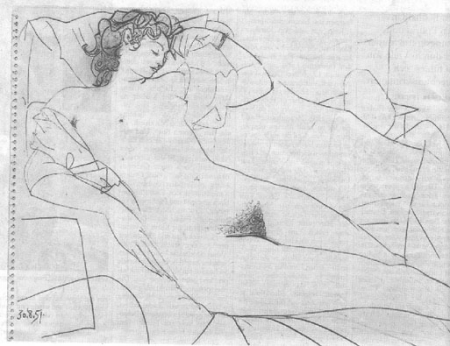
            Though they excelled majorly in painting, Picasso and Matisse held similar styles in drawing as well. Since drawing is “the most direct expression of an artist’s thoughts” (metmuseum.org), it’s hard not to feel like you’ve just witnessed a raw and uncomplicated insight into the minds of these great artists. They exemplified a unique understanding of form and shape and were able to capture the essence of the subject’s being. Both had similar drawing techniques, preferring to work in elegant and un-shaded lines. Their precise line drawings often described simplified forms of female figures. These drawings helped both artists pin point and work out compositional and stylistic complications encountered while working on their piece.
            Because drawing is such an important part of understanding the fundamentals of shape and form, its no surprise that Picasso and Matisse were able to develop transformational techniques. For example, both utilized different variations of line weight when drawing. Their lines became bolder throughout the years; in some pieces we see the line weight switch to a heavier and thicker line. This line variance created forms that although devoid of detail, were filled with a unique unpolluted essence of truth to them. The forms held a sculptural appearance, which makes sense considering Picasso’s excellence in sculpture. In fact, Matisse was inspired and intrigued by Picasso’s style of cubism and led him to produce drawings and compositions with geometric structure to them.
            Although both were very similar, Picasso’s enigmatic personality led him to delve much more in experimentation with drawing than Matisse. He became fascinated with drawing with light, using cameras and small lights to produce works that although fleeting, were captured via photograph. Picasso’s energy and excitement is expressed in many of his light drawings, they capture the entire frame with seemingly senseless swirls. This innovation does not detract from the fact that although made with light, these drawings still capture his noticeable style and preference for simplified clean lines and understanding of the relationship between space, form and shape.    

Odalisque, Picasso 
pencil sketch, 1951

Face and Dove, Picasso 
line drawing 1949

Themes et Variations, Matisse
line drawing, 1941

Patitcha Souriante, Matisse
line drawing, 1947


Image Sources
 "97-picasso-or-breker." 97-picasso-or-breker. N.p., n.d. Web. 13 Dec. 2013

 "Inside Matisse Drawing." Inside Matisse Drawing. N.p., n.d. Web. 13 Dec. 2013